
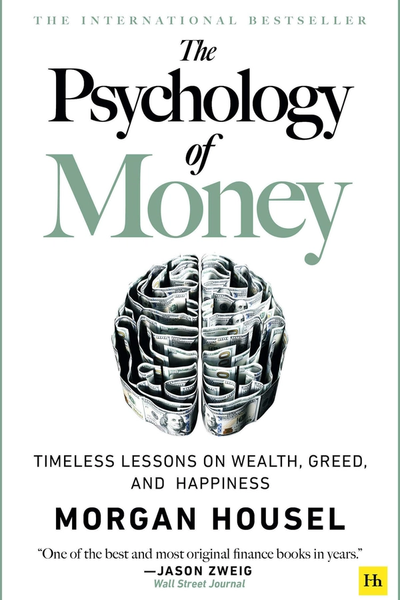
The Psychology of Money
by Morgan Housel
Morgan Housel's 19 counterintuitive lessons reveal why financial success is 80% psychology, 20% knowledge. Learn why doing well with money isn't about what you know it's how you behave, how you think about risk, and how you understand compounding.
Key Takeaways
- No one is crazy with money: everyone's financial decisions make sense given their unique life experiences and worldview
- Getting wealthy and staying wealthy are different skills: one requires optimism and risk-taking, the other requires humility and fear
- Compound interest is the most powerful force in finance: time in the market beats timing the market
- Wealth is what you don't see: true wealth is the money not spent, the financial options and flexibility you've accumulated
- Save money without a specific reason: financial flexibility is the most valuable thing money can buy
- Room for error is the most important part of any financial plan: things will go wrong, plan for it
- Reasonable beats rational: the best financial plan is one you can stick with, even if it's not mathematically optimal
- Your personal history creates your worldview on money: and that worldview may not match reality
Favorite Quotes
- Spending money to show people how much money you have is the fastest way to have less money.
- The highest form of wealth is the ability to wake up every morning and say, I can do whatever I want today.
- You can be wrong half the time and still make a fortune.
- Savings without a spending goal gives you options and flexibility.
- Planning is important, but the most important part of every plan is to plan on the plan not going according to plan.
- Getting money requires taking risks, being optimistic, and putting yourself out there. But keeping money requires the opposite of taking risk.
- Wealth is created by suppressing what you could buy today in order to have more stuff or more options in the future.
- The world is full of people who look modest but are actually wealthy, and people who look rich but are barely hanging on.
Src: https://grahammann.net/book-notes/the-psychology-of-money-morgan-housel